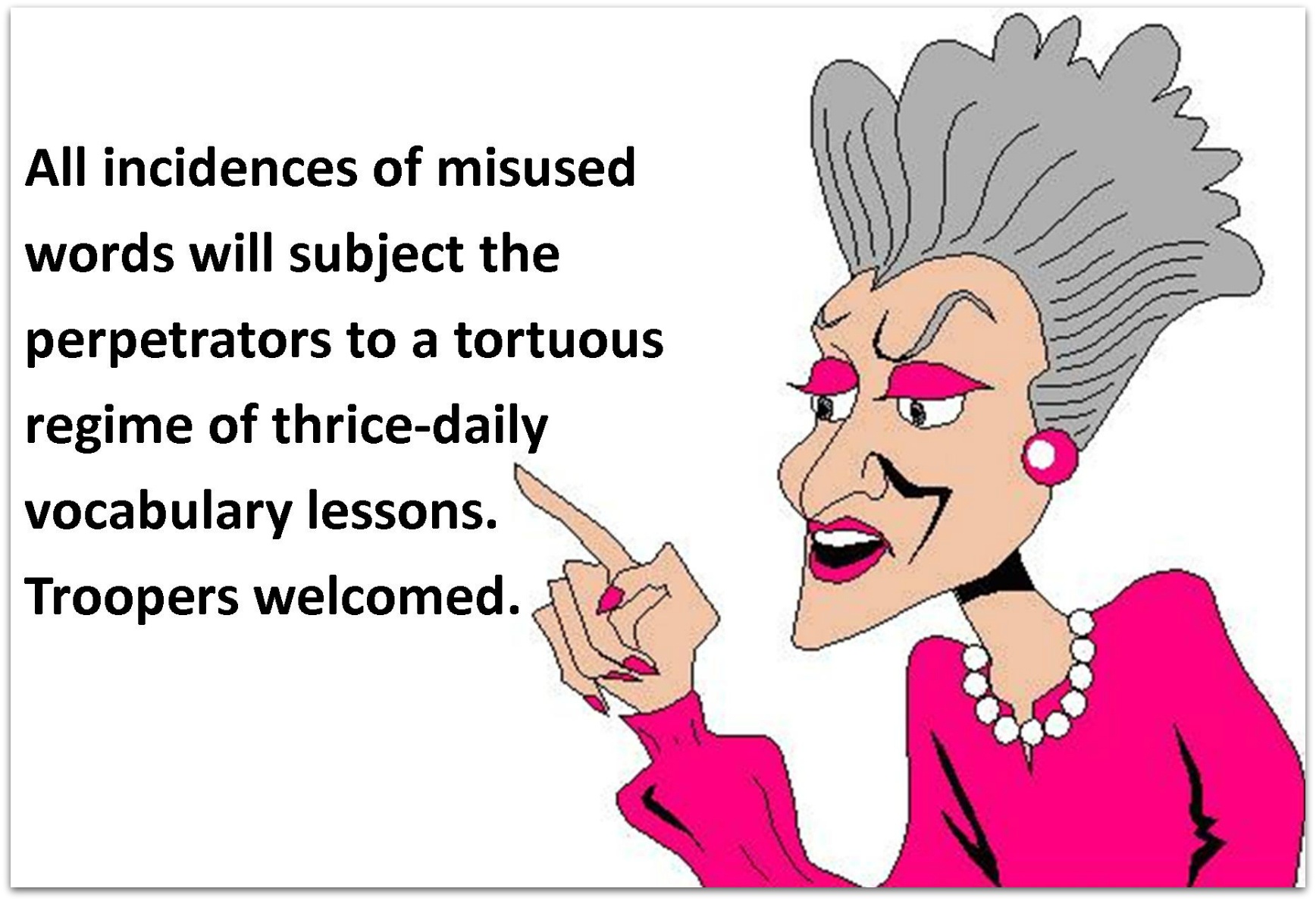
Although few people compare with the likes of, say, George W. Bush in creative applications of the English language, most of us have at one time or another used the wrong word in writing or speaking. Following are five misused word pairs we’ve seen in recent months at ProofreadNOW.com.
GrammarPhile Blog
Terri Porter
Recent Posts
5 Words Even Smart People Misuse
Posted by Terri Porter Feb 11, 2016, 5:00:00 AM
Topics: common mistakes, misused words
3 Rules for Using Percentages
Posted by Terri Porter Jan 28, 2016, 7:00:00 AM
I’ve had a love affair with words and grammar pretty much my entire life. Math? Not so much. It’s useful, yes. Important too. But having to apply it is like going to the dentist — something I need to do even if I’m less than thrilled about it. So it’s with the greater good in mind that I tackle the use of percent, percentage, percentage points and related questions. You’re welcome.
Percent vs. Percentage
Although some sources (the mercurial Merriam-Webster’s being one of them) suggest that percent and percentage are interchangeable, the more traditional approach is to use percent with a number and percentage with no number:
A surprisingly high percentage of college freshmen drop out.
More than 25 percent of college freshmen drop out.
No style guide that we know of supports using numerals with percentage. For that reason, the following construction is incorrect:
The percentage of college freshmen who drop out is higher than 25.
You’d either need to add “percent” at the end of the sentence or rewrite to avoid using “percentage/percent” in the same sentence. The latter approach is preferable but not always possible, as in sports stories. For example:
Tater and Tot had the highest field goal percentages for the night, shooting 63 and 68 percent, respectively.
Percent vs. Percentage Points
Topics: percentage points, percentage, percent, percent sign
The End of the English Language?
Posted by Terri Porter Jan 14, 2016, 7:00:00 AM
Consider this sentence: Ask your friend if they want to join us for dinner.
If you’re among those who would automatically change they want to he or she wants, you’re about to shudder (or perhaps become apoplectic). Last week, the American Dialect Society (ADS) announced that singular they is its Word of the Year for 2015.
Never mind that singular they is already common in American speech … or that Shakespeare and Jane Austen regularly used it … or that last year the Washington Post style guide officially adopted this aberration. You know in your heart of hearts that it’s just plain wrong.
Topics: pronouns, singular they
4 Ways to Eliminate the Bloat in Your Writing
Posted by Terri Porter Jan 7, 2016, 7:00:00 AM
After overindulging during the holidays, many of us resolve in the new year to eat less and exercise more in order to lose weight and get more fit. The resulting healthy glow comes from feeling more energized, motivated and confident. Imagine imbuing your writing with the same kind of energy! Eliminating the bloat can make your writing come alive and practically jump off the page to draw readers in.
Topics: passive voice, redundancy, bloated writing, active voice, verbosity
It's Just Another New Year's Eve ... or Is It?
Posted by Terri Porter Dec 31, 2015, 6:00:00 AM
A new year is upon us, and with it comes the answer to that burning question that invariably crops up around this time: Is it New Years Day, New Year’s Day or New Years’ Day? It’s New Year’s Day, but attempts to explain why can generate even more questions.
Topics: possessives, apostrophe
Dashing Through December
Posted by Terri Porter Dec 17, 2015, 5:00:00 AM
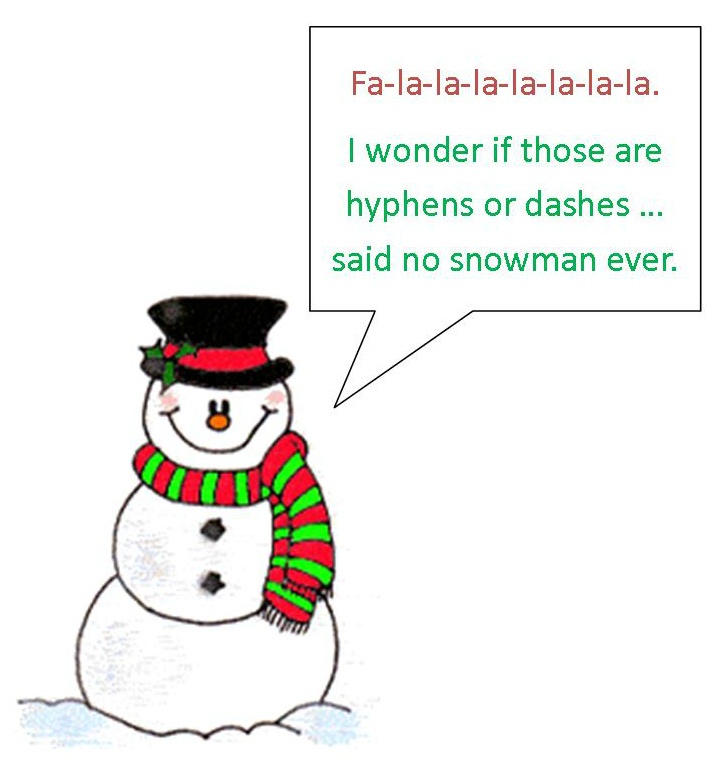
“On Dasher, On Dancer …” Dashing through the snow. Dashing to the store to buy that last-minute gift. Adding a dash of nutmeg to the eggnog. Wearing a dashing get-up for the holiday party. December is downright dashing. Guess what today’s post is about?
5 Tips for Writing the Perfect Thank-You
Posted by Terri Porter Dec 3, 2015, 7:00:00 AM
Topics: business writing, writing tips, writing thank you notes, thank you notes
How to Tame Your Pet (Peeves)
Posted by Terri Porter Nov 19, 2015, 7:00:00 AM
Be glad you’re not my kid. At 13, he’s already had to endure years of unsolicited lessons on proper grammar, usage, syntax and vocabulary, not unlike one several months ago that started like this, when literally was his word du jour:
Him: It’s literally raining cats and dogs right now.
Me (looking out the window): By golly, you’re right! I just saw a pug, two terriers and a tabby bounce and roll on the pavement.
At least he grinned. Humor works so much better than reminding him of the difference between literally and figuratively for the 86th time, which tends to elicit the eye roll he’s come to perfect. Similarly, I’ve found giving him a certain look is worth at least, oh, 30 words:
Topics: literally
The 4 Absolute Best Ways to Steer Clear of Hyperbole
Posted by Terri Porter Nov 5, 2015, 6:30:00 AM
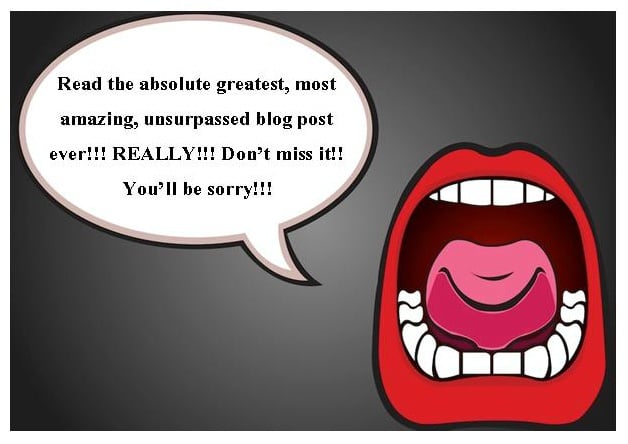
With the presidential election cycle in full swing and local elections taking place this week, now seems the best time ever to talk about hyperbole in marketing copy. Or not. Maybe it’s just a good time to talk about it. After all, political campaign ads are the epitome of hyperbole.
Hyperbole is extravagant exaggeration, and you see it everywhere — on television, in print, online, in ads, in the news, in email, in social media posts. We see it frequently in marketing, PR and campaign materials that come through ProofreadNOW.com.
Topics: hyperbole
8 Proofreading Tricks (and a Few Treats)
Posted by Terri Porter Oct 29, 2015, 5:00:00 AM
Who says you’re too old to trick-or-treat? This week, we offer 8 tricks to help you become a better proofreader, along with a few treats at the end for those who proofread marketing, legal or medical copy.
Not all of these techniques will work for everyone, and they won’t work in all instances. Much will depend on the length and complexity of the text, the time available for proofreading and what works for you individually. I use some of these tricks regularly and others not at all. Give them a try with your next document and see what works for you.
Topics: proofreading, legal writing, medical writing, marketing writing, proofreading tricks, proofreading tips
Search Our Blog
Recent Posts
Posts by Topic
- business writing (33)
- proofreading (24)
- punctuation (22)
- grammar (19)
- misused words (16)
- vocabulary test (16)
- quiz (15)
- writing tips (13)
- capitalization (12)
- vocabulary quiz (12)
- hyphenation (10)
- word quiz (10)
- common mistakes (9)
- pronouns (9)
- conjunctions (8)
- grammar errors (8)
- legal writing (8)
- word test (8)
- adjectives (7)
- effective writing (7)
- grammar quiz (7)
- possessives (7)
- prepositions (7)
- typos, typographic errors (7)
- verbs (7)
- writing (7)
- Chicago Manual of Style (6)
- Popular Style Guides (6)
- Style Guides (6)
- artificial intelligence (6)
- hyphen (6)
- marketing writing (6)
- quiz answers (6)
- vocabulary (6)
- Comma (5)
- Oxford comma (5)
- adverbs (5)
- business communications (5)
- email marketing (5)
- idioms (5)
- numbers (5)
- passive voice (5)
- AI (4)
- abbreviations (4)
- clarity proofreading (4)
- commas (4)
- consistency in writing (4)
- editing (4)
- errors (4)
- homonyms (4)
- preposition (4)
- proofreaders (4)
- proofreading tips (4)
- proofreadinq quiz (4)
- quotation marks (4)
- website copy (4)
- word usage (4)
- writing style (4)
- writing techniques (4)
- active voice (3)
- apostrophe (3)
- cliches (3)
- common proofreading mistakes (3)
- contest (3)
- creative writing (3)
- dictionary (3)
- email (3)
- grammar rules (3)
- grammatical errors (3)
- infinitives (3)
- medical writing (3)
- periods (3)
- plural (3)
- plural or singular verb (3)
- professional proofreading (3)
- proofreader (3)
- proofreading for legal documents (3)
- proofreading quality (3)
- proofreading quiz (3)
- proofreading websites (3)
- slang (3)
- spacing (3)
- spelling (3)
- style copyediting (3)
- style guide (3)
- technical writing (3)
- trends in language (3)
- what to expect from proofreaders (3)
- who (3)
- word meaning (3)
- writing about boring topics (3)
- writing mistakes (3)
- 10 helpful tips (2)
- AP style (2)
- English language (2)
- Latin abbreviations (2)
- Modern Language Association Style Manual (2)
- Nouns (2)
- Oxford Style Manual (2)
- The Elements of Style (2)
- alot/a lot (2)
- apostrophes (2)
- automated grammar checker (2)
- b2b marketing content (2)
- b2b writing help (2)
- business proofreading (2)
- clauses (2)
- collective noun (2)
- copyright (2)
- correct pronunciation (2)
- correcting grammar (2)
- dangling modifiers (2)
- em dash (2)
- financial writing (2)
- formal writing (2)
- gerunds (2)
- grammar checker (2)
- grammar checker software (2)
- grammar mistakes (2)
- grammar tips (2)
- how are words added to the dictionary (2)
- how to write out money in text (2)
- informal writing (2)
- italicize (2)
- jargon (2)
- lay (2)
- laying (2)
- legal proofreading (2)
- lie (2)
- maintain consistency in writing (2)
- malapropism (2)
- misspelled words (2)
- misspellings (2)
- nonrestrictive clauses (2)
- parallel structure (2)
- parallelism (2)
- parts of speech (2)
- percent (2)
- percent sign (2)
- percentage (2)
- percentage points (2)
- persuade (2)
- plurals (2)
- possessive form (2)
- possessives of proper nouns (2)
- prefixes (2)
- pronunciation (2)
- proofreading for business (2)
- proofreading quiz answers (2)
- proofreading tricks (2)
- proposals (2)
- public relations writing (2)
- punctuation quiz (2)
- question mark (2)
- redundancy (2)
- restrictive clauses (2)
- sentence structure (2)
- subjunctive form (2)
- suffixes (2)
- synonyms (2)
- their (2)
- there (2)
- they're (2)
- typographical errors (2)
- typos (2)
- using jargon (2)
- what to expect from a proofreader (2)
- whom (2)
- writers (2)
- writing for your audience (2)
- writing guidelines (2)
- writing quiz (2)
- writing voice (2)
- #writersblock (1)
- AM (1)
- AP stylebook (1)
- Associated Press Stylebook (1)
- B2B Writing (1)
- Find and replace (1)
- Greek word roots (1)
- Gregg Reference Manual (1)
- I or me (1)
- Latin word roots (1)
- Midnight (1)
- Noon (1)
- O or oh (1)
- PM (1)
- Video (1)
- academic terms (1)
- affixes (1)
- ahold/a hold (1)
- alright/all right (1)
- antonym (1)
- appositives (1)
- articles (1)
- avoiding gender bias (1)
- awhile/a while (1)
- beat writer's block (1)
- beside or besides? (1)
- bias (1)
- bizspeak (1)
- bloated writing (1)
- blog (1)
- blog posts (1)
- business phrases to stop using (1)
- buzzwords (1)
- casual writing (1)
- comparatives (1)
- comparison of proofreading services (1)
- complementary infinitives (1)
- compound modifiers (1)
- compound nouns (1)
- compound sentences (1)
- compound verbs (1)
- compound words (1)
- conditional clauses (1)
- confusing words (1)
- conjugating verbs (1)
- consistency in proofreading (1)
- consistent messaging (1)
- content (1)
- continuously and continually (1)
- convince (1)
- copyediting (1)
- copyeditor (1)
- cursive writing (1)
- dash (1)
- dates (1)
- documents (1)
- double negative (1)
- double negatives (1)
- dumbing down of language (1)
- e.g. (1)
- each other and one another (1)
- editorial occupations (1)
- eggcorns (1)
- emoji (1)
- emojis (1)
- en dash (1)
- essential clauses (1)
- exclamation point (1)
- exempli gratia (1)
- false subject (1)
- fighting writer's block (1)
- figures (1)
- first-person pronouns (1)
- footnotes (1)
- foreign phrases (1)
- foreign words (1)
- gender bias (1)
- government writing (1)
- government-related words (1)
- grammar fails (1)
- headline errors (1)
- holidays (1)
- homographs (1)
- homophone (1)
- hypallage (1)
- hyperbole (1)
- i.e., (1)
- id est (1)
- if and whether (1)
- imperative mood (1)
- imply (1)
- in behalf of and on behalf of (1)
- independent clauses (1)
- indicative mood (1)
- infer (1)
- interrogative pronouns (1)
- into versus in to (1)
- irregardless (1)
- irregular verbs (1)
- laid (1)
- lain (1)
- liable and likely (1)
- like (1)
- links (1)
- literally (1)
- literary devices (1)
- lying (1)
- main clauses (1)
- marketing email (1)
- misplaced modifiers (1)
- missing dates (1)
- mistakes (1)
- modifiers (1)
- multiple subjects (1)
- myth (1)
- negatives (1)
- noun clauses (1)
- objective pronouns (1)
- onomatopoeia (1)
- onto versus on to (1)
- or that (1)
- paragraph (1)
- paragraph construction (1)
- participle (1)
- participles (1)
- past participle (1)
- past tense (1)
- personal profile (1)
- placement of only (1)
- plural pronouns (1)
- pluralize (1)
- points (1)
- preposition at end of sentence (1)
- prepositional phrases (1)
- present participle (1)
- present perfect tense (1)
- presently (1)
- press release length (1)
- press releases (1)
- professional proofreader (1)
- project management (1)
- pronouncing words beginning with h (1)
- pronouns with than (1)
- proofeading technique (1)
- proofread (1)
- proofreader myths (1)
- proofreading errors (1)
- proofreading mistakes (1)
- proofreading red flags (1)
- published documents (1)
- quotations (1)
- readability (1)
- redundant phrases (1)
- reflexive pronouns (1)
- regular verbs (1)
- relative clauses (1)
- relative pronouns (1)
- religious words (1)
- repeating words (1)
- resume (1)
- resume writing (1)
- rules for writing (1)
- run-on sentences (1)
- scientific terms (1)
- scientific writing (1)
- search engines (1)
- semicolon (1)
- sentence fragments (1)
- sentence restructure (1)
- sentences (1)
- seo (1)
- sic (1)
- singular (1)
- singular pronouns (1)
- singular they (1)
- singular verb (1)
- skills needed for proofreading (1)
- skills-based resume (1)
- slash (1)
- social media (1)
- space issues (1)
- spaces (1)
- spell check (1)
- spell-check software (1)
- split infinitive (1)
- squinting modifiers (1)
- starting sentences with and (1)
- style sheet (1)
- subjective pronouns (1)
- subjunctive mood (1)
- superscript (1)
- supposably (1)
- survey (1)
- technical editing (1)
- templats (1)
- thank you notes (1)
- that (1)
- that vs. which (1)
- this versus that (1)
- time (1)
- time of day (1)
- time-related modifiers (1)
- toward or towards (1)
- two letter word (1)
- typographic errors (1)
- use of because (1)
- using I or me (1)
- using spaces in abbreviations (1)
- verbosity (1)
- video content (1)
- what proofreaders don't do (1)
- what proofreaders want you to know (1)
- what to expect from a copyeditor (1)
- what to expect from an editor (1)
- when to omit that (1)
- when to use that (1)
- whereas (1)
- which (1)
- who and whoever (1)
- whom and whomever (1)
- word choices (1)
- word roots (1)
- words (1)
- words to avoid (1)
- writing bios (1)
- writing currency (1)
- writing marketing copy (1)
- writing myth (1)
- writing number in dialogue (1)
- writing numbers (1)
- writing portfolio (1)
- writing press releases (1)
- writing rituals (1)
- writing skills (1)
- writing thank you notes (1)
- writing topics (1)
- writing web copy (1)
- you or yourself (1)