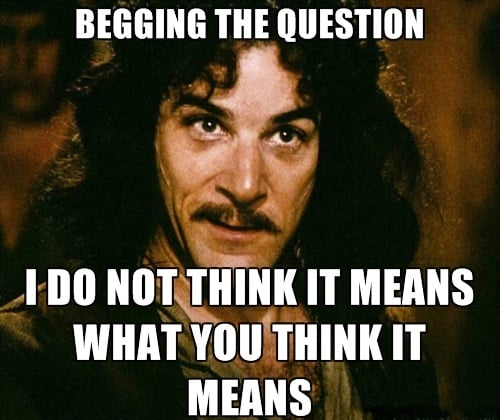
Talking about misused words and phrases can be tricky, especially given that the definitions in many commonly used dictionaries (e.g., Merriam-Webster) morph to reflect popular usage — even to the point where a word contains two definitions that mean the exact opposite, as in these examples:
Literally: (1) actually, (2) virtually; in effect
Peruse: (1) to look at or read in an informal or relaxed way, (2) to examine or read in a very careful way
Read More
Topics:
misused words
 Last week we talked about when to use onto (one word) versus on to (two words). As promised, we’re talking about the distinction between into versus in to this week. While some of the same guidelines apply, into can be trickier because it has more definitions and different strategies for remembering which form to use.
Demystifying Into
Like onto, into (one word) is a preposition that indicates movement. But into can mean so much more. Understanding the various definitions of into can help in figuring out whether to use one word or two. If you’re questioning whether to use into or in to, start by determining whether the problem sentence fits into one of the definitions or examples below.
Read More
Topics:
into versus in to
 While reading an article recently on 29 famous people who failed before they succeeded, I came across these two sentences:
[Walt Disney] went onto become the guy who redefined American childhood.
[Thomas Edison] went onto be fired from his first two jobs for not being suitably productive.
And voilà! A blog post was born. Any idea why? Here’s a hint: It’s not about Mickey Mouse and light bulbs. No, the inspiration is smaller than that. Much smaller. Four letters to be precise — o n t o — and the spacing between them.
Read More
Topics:
onto versus on to
 With the celebration of the American flag on Independence Day and the recent flap around the Confederate battle flag, now seems a good time to talk about red flags in proofreading — the sneaky errors in documents that are easy to overlook, especially if you’re self-editing.
Read More
Topics:
common mistakes,
common proofreading mistakes,
proofreading red flags
When in the Course of human events, it becomes necessary for one people to dissolve the political bands which have connected them with another, and to assume among the powers of the earth, the separate and equal station to which the Laws of Nature and of Nature's God entitle them, a decent respect to the opinions of mankind requires that they should declare the causes which impel them to the separation.
In the spirit of Independence Day, freedom and such, this first sentence of the Declaration of Independence provides a springboard for a timely discussion of restrictive versus nonrestrictive clauses.
Read More
Topics:
nonrestrictive clauses,
that vs. which,
essential clauses,
clauses,
restrictive clauses
Thanks to everyone who took our proofreading quiz last week. Congratulations to Arlene Gregoire, who missed just three of the 51 errors, including some of the sneakiest ones.
The mistakes that tripped up most people appeared in the second and third sentences of paragraph 3: decreases/increases insulin and hyper/hypoglycemic. These errors go beyond basic grammar and punctuation mistakes, many of which Microsoft Word will highlight, and require a closer read to ensure the text makes sense.
Read More
Topics:
proofreading,
proofreadinq quiz,
quiz answers,
proofreading quiz answers
School’s out (or nearly out) across the nation and summer vacation beckons. We thought another proofreading quiz would be a good way to kick off the summer fun.
The five numbered paragraphs below are laced with errors — some glaring and some that are less obvious. But they’re all unequivocally wrong. Acceptable variations — such as words with different spellings (e.g., advisor, adviser) or sentences that could be punctuated multiple ways — are not included here.
Read More
Topics:
proofreadinq quiz
This week we wrap up our three-part miniseries on pronouns by taking on one of the most hotly debated grammar questions — the use of like versus as — and how your choices will dictate which pronouns you use.
Read More
Topics:
conjunctions,
pronouns,
prepositions,
like
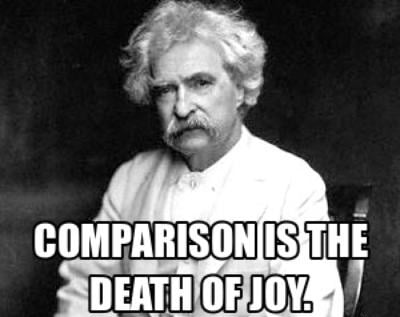
Mark Twain may not have been talking about pronouns when he said “Comparison is the death of joy,” but the sentiment somehow fits. Just ask anyone who struggles with figuring out which pronouns to use with comparatives such as than, as and like.
How can three little words wreak so much havoc with pronouns? The short answer is that all three words can perform multiple functions in a sentence, and when the function isn’t clear, the resulting usage is mixed.
Read More
Topics:
conjunctions,
pronouns,
prepositions,
pronouns with than,
comparatives