GrammarPhile Blog

We Have Met the Enemy, and It Is Pronouns

Posted by Terri Porter   May 28, 2015, 6:00:00 AM

Being an editor means never having time off. If only we could flip a switch to turn off whatever mechanism it is that forces us to notice spelling and grammatical errors everywhere. Sure, sometimes it’s a source of amusement, like this sign I saw while eating breakfast across the street from that establishment, but much of the time it’s downright painful.

Read More

Topics: pronouns, plural pronouns, singular pronouns

How to Herd Cats Like a Pro (Part 2)

Posted by Terri Porter   May 20, 2015, 4:30:00 AM

Last week, we talked about remedying the content and stylistic inconsistencies often found in large documents — specifically, the importance of getting a handle on how your final document should look before you begin writing. This week, we narrow the focus to talk about how to bridge the gap between your vision and the final product.

That’s where templates, style sheets and style guides come in handy. They allow you to create the stylistic elements you want and to apply them uniformly throughout the document to ensure unparalleled consistency. We provide an overview of these tools below, without detailing how to create them (online tutorials abound on how to create templates and style sheets in Word, and we’ll talk in a future post about how to develop your own style guide).

Read More

Topics: style guide, style sheet, consistency in writing, templats

How to Herd Cats Like a Pro (Part 1)

Posted by Terri Porter   May 14, 2015, 4:30:00 AM

We edit a fair number of large documents, often put together by multiple people or teams. Each project has its idiosyncrasies, but a common problem among nearly all of them is a lack of consistency, stemming from different:

  • Writing styles
  • Page layout/structure
  • Graphics formatting/style
  • Heading and text styles
  • Word choice/usage
  • Mechanics (punctuation and, particularly, capitalization)
Read More

Topics: proofreading, writing style, project management, maintain consistency in writing, consistency in writing, clarity proofreading, style copyediting

The Return from Neverland

Posted by Terri Porter   May 7, 2015, 5:00:00 AM


Never start a sentence with a conjunction. Never end a sentence with a preposition. How many times have you heard these and similar refrains?

Some find a certain comfort in such absolutes because correcting the problem is generally easy — they see one of these errors, and they fix it. But rigidity can be stifling, especially when the reasoning behind it is “because that’s the way we’ve always done it.”

Does that mean writers can just make up their own rules as they go along? Of course not. But questioning the basis for rules serves two purposes: (1) It increases understanding of the rules and their application, and (2) it allows for evolution of the language.

Read More

Topics: conjunctions, prepositions, rules for writing

When Homophones Come Calling

Posted by Terri Porter   Apr 30, 2015, 4:30:00 AM

Read More

Topics: homonyms, homophone, homographs

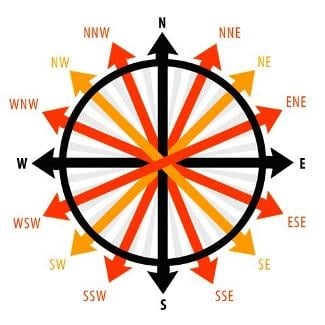
North, South, West, East … Capitalizing Can Be a Beast

Posted by Terri Porter   Apr 23, 2015, 6:00:00 PM

Feeling lost? Rudderless? Unsure which way to turn? Unfortunately, we can’t help you find your way. We are, after all, a proofreading site. BUT … we can offer some direction on directions — specifically, whether to capitalize them.

At the most basic level, the standard advice is to lowercase north, south, east and west when used as compass directions and to capitalize them when they are used as part of a proper noun or adjective or refer to regions or geographic areas. So:

Read More

Topics: capitalization

April Aggravations Tourney Winners

Posted by Terri Porter   Apr 15, 2015, 4:30:00 AM

Reflexive Pronouns Crowned Tourney Champ

Beating back the persistent Plurals/Possessives in overtime, Reflexive Pronouns narrowly won our April Aggravations tourney. Both had advanced to the final round after Plurals handily beat One Word or Two, and Reflexive edged the upstart Misplaced Modifiers in the Final Four.

We couldn’t have asked for a more exciting championship, as the two teams traded the lead throughout both regulation and overtime. But a last-minute surge by Plurals/Possessive’s fell short, and Reflexive Pronouns itself emerged victorious.

Read More

Topics: homonyms, possessives, pronouns, grammatical errors, reflexive pronouns, collective noun, plurals, government-related words

April Aggravations: Antidote for March Madness Letdown

Posted by Terri Porter   Apr 9, 2015, 6:30:00 AM

March Madness refers to the excitement, fervor and general craziness surrounding the NCAA Division I men’s basketball tournament, during which upsets, buzzer beaters and rowdy celebrations are the norm. That all ended Monday night with Duke edging Wisconsin to claim its fifth national championship. Or did it?

For those who simply can’t wait another year, we offer our own version of the playoffs, with a grammatical twist: April Aggravations. Below you’ll find our Elite Eight list of contenders competing for the coveted title of “Most Annoying Grammatical Error Ever,” collected from our editors here at ProofreadNOW.com.

Let us know in the comments below which ones you’d send to the Final Four, which two will end up competing for the championship and, finally, which error will win it all as “most annoying.” We’ll crown the winning pet peeve in next week’s post. Also let us know about others that grate on your nerves, and we’ll add them to the pool of contenders for our next grammatical error playoff.


Read More

Topics: homonyms, possessives, pronouns, grammatical errors, plurals

Fullproof, er … Foolproof Advice for Avoiding Malapropisms and Eggcorns

Posted by Terri Porter   Apr 1, 2015, 6:00:00 AM


Read More

Topics: malapropism, eggcorns

Spring Has Sprung …

Posted by Terri Porter   Mar 25, 2015, 6:30:00 AM

… at least in some parts of the country. In other parts, it sprang some time ago. Or is it “sprung some time ago”?

Spring the verb behaves in much the same way as spring the season — irregularly. Regular verbs march in lockstep, all forming their simple past tense by tacking on the easily remembered “ed” at the end. Some examples are laugh (laughed), cough (coughed) and shovel (shoveled).

But irregular verbs are misfits. They march to the beat of their own drum, using whatever past-tense form they feel like. Examples include drink (drank), begin (began) and choose (chose). The lack of any rhyme or reason for their behavior makes application of a rule difficult. That’s why we get questions like “Is it sprang or sprung?”

Read More

Topics: verbs, past participle, regular verbs, participle, irregular verbs, present participle

Subscribe to Email Updates

Sign up for our emails!

Sign Up

Search Our Blog

Recent Posts

Posts by Topic

see all